


Research
Research News
Research News
Total 83
-

Publication of East Asian Buddhist Literature, Korea’s First Eng...
Publication of East Asian Buddhist Literature, Korea’s First English Journal Specializing in East Asian Buddhist Literature by the Institute for Buddhist Culture at Dongguk University Dongguk University’s (President Yoon Sung-yee) Department of East Asian Buddhist Literature Translation at the Institute for Buddhist Culture (Director Kim Jong-wook) recently published the first volume of East Asian Buddhist Literature (EABL). EABL is the only English journal in Korea that specializes in East Asian Buddhist Literature. Professor Kim Jong-wook at Dongguk University and Professor Ochiai Toshinori at the International College for Postgraduate Buddhist Studies in Japan are the joint chief editors of EABL, and specialists of Korean, American, Chinese, and Japanese Buddhist literatures form the editorial committee.The EABL discovers and critically interprets manuscripts and printed copies of Buddhist literature in East Asia, including those from Korea. Based on research findings, the journal connects with the original literature and explains it in English.EABL is the sister journal to Korea’s only English Buddhist Journal, International Journal of Buddhist Thought & Culture, issued by the Institute for Buddhist Culture. The publication of EABL is said to have accelerated the Institute’s pace for the internationalization of Korean Buddhism study.
2020.04.14. 2027 -
Fostering “Harmonization-Type Talent” to Lead the 4th Industrial...
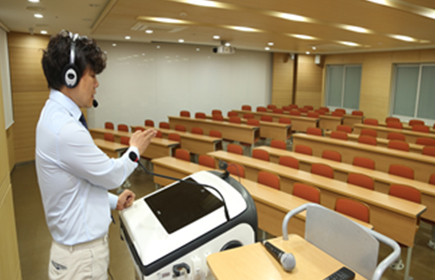
Fostering “Harmonization-Type Talent” to Lead the 4th Industrial Revolution Founded in 1906 by Buddhist pioneers with the purpose of “Protecting the Nation by means of Education” when the future of the nation seemed bleak under the Japanese colonial rule, Dongguk University began with the name Myeongjin School, and later continued its development under the names of the Advanced Buddhism School, Jungang Haklim, Central Buddhism College, and Hyehwa College. Despite being forced to close under Japanese imperialism, the University has enlightened the spirit of the times at every critical moment of Korean society. After national liberation, the University changed its name to Dongguk University in 1946 and was promoted from a college to university in 1953. Today, Dongguk University has more than 300,000 alumni in various fields, including religion, politics, economy, society, education, and culture. Currently, it has established sisterhood relationships with more than 300 universities in 51 countries worldwide, and is leading the Korean society as the nation's top prestigious private university with over 28,000 students across four campuses in Seoul, Goyang, Gyeongju, and Los Angeles.Accelerating the advent of the future campusSince 2019, Dongguk University has been preparing to introduce a full-duplex remote class system laying the groundwork for the 4th industrial revolution. In the wake of the spread of COVID-19, remote lectures were put into practice as of March. Remote lectures, run via advanced ICT technology, are drawing attention, as full-duplex classes enable data sharing, writing, video playback, interactive communication, and quizzes in real time. All teachers are fully prepared for the real-time remote lectures by shooting sample lectures and performing advance monitoring. Furthermore, stable operation of non-contact online lectures was possible without causing server overload due to an increase in the number of users. Exemplary preparedness has been displayed throughout the university community.Education innovation leading the 4th industrial revolutionAs a representative concept for the development plan of the Energize Dongguk Project, which was announced by the university president, Yoon Sung-yee, upon his inauguration, “Fostering Harmonization-Type Talent to Lead the 4th Industrial Revolution” has been selected. A new department dedicated to the project was also established under the name “Education and Innovation Division.” First, the major-convergence system was introduced from the first semester of this year to remove barriers between departments and majors. Under the convergence of majors, a department (major) and another department (major) form a new major program. This newly developed major convergence can be taken by students of any department (major). This year, public talent and machine intelligence convergence majors were established, and new major-convergence programs are expected to be created in the future.The university’s preparation for software education capabilities is also noteworthy. Dongguk University developed a basic curriculum of software education and strengthened software education for non-majors, such as humanities, social sciences, arts, physical education, and natural sciences. The university aims to provide software convergence education that goes beyond the conventional level of convergence between engineering disciplines and encompasses science and technology, engineering, manufacturing, and software from a humanities perspective. A curriculum that realizes student-centered convergence-based education through the integration of engineering, humanities, social science, and arts via software is currently in operation. The number of students completing the convergence software major increased significantly from 212 in 2018 to 313 in 2019. Regular semesters are also operated flexibly. Dongguk University introduced the Intensive Course Program to enable instructors to select and operate various lengths of curriculum, such as 4 weeks, 8 weeks, and 10 weeks, without the constraint of the existing standard number of class days.Analysis based on data facilitates more accurate and reasonable decision making in the University. Last year, Dongguk University established an Institutional Research (IR) team to systematically collect, collate, and analyze all university data, provide them to members of the University, and support university policy decisions.“Turning Aspirations into Reality,” creating a university culture centered on youth startupsTo date, Dongguk University strived to create an entrepreneurship-oriented university culture. More systematic support of entrepreneurship was made possible by combining various aspects of entrepreneurship, such as startup support, incubation, and education functions, which had been managed under multiple organizations, into Startup-One, an integrated management organization for entrepreneurship on campus. A number of student startups are being fostered by introducing an entrepreneurship-friendly undergraduate administrative system, such as allowing leaves of absence for startup ventures and a credit-substitution system for entrepreneurship. The University is building a strong foundation as a regional hub university by supporting up to 100 million won in marketing and commercialization costs for young entrepreneurs in the preliminary and early-stage startups. Last year, the University received the 2019 Presidential Award for Venture Startup Promotions.300,000-strong alumni networkBefitting a university with a 114-year history, alumni serve as the University’s strongest supporters. Dongguk University alumni actively participate in the donation of development funds for the University and juniors every year. In particular, at the Sponsored Night to Energize Dongguk event held in November of last year, the University presented a vision of developing and fostering departments to reach the top 10 in Korea and top 100 in the world, and the donation support amounted to 28 billion. Based on these donations, Dongguk University plans to add fresh fuels to cultivating global talent and reinforcing research competitiveness by inviting outstanding instructors and fostering world-class scholars, and to building a future campus by establishing a world-class education and research infrastructure.
2020.04.09. 2312 -
Shin Han-seung, Professor at Dongguk University, Inaugurated as ...
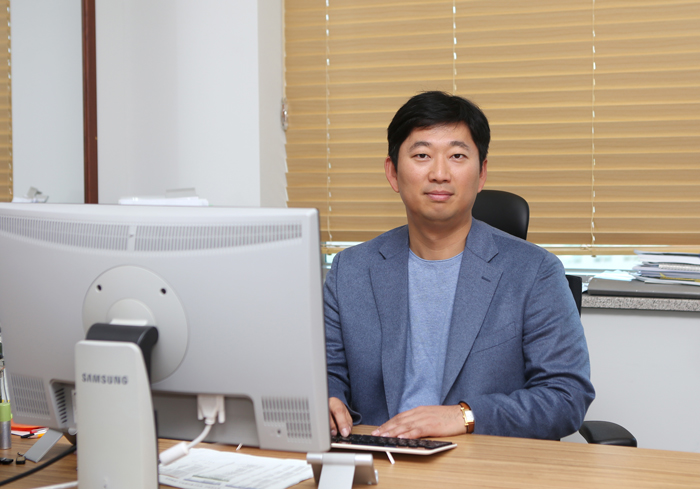
Shin Han-seung, Professor at Dongguk University, Inaugurated as Chairman of International Life Science Institute KoreaProfessor Shin Han-seung of Dongguk University (Professor in the Department of Food Science and Biotechnology, president of the Bio-Medical Convergence Research Institute) was inaugurated as the chairman of the International Life Science Institute Korea (ILSI Korea) on the 15th. His term continues until December 2022.ILSI Korea is an international non-profit scientific organization that identifies key issues and research trends in life-science technology, food safety, health, nutrition, and new biotechnology from a global perspective and explores and develops solutions through scientific collaboration. Currently, it consists of 16 branches and research foundations worldwide and is pursuing continuous cooperation to close the gap in scientific knowledge among countries and regions by hosting and attending international conferences.Professor Shin Han-seung has produced outstanding research accomplishments, publishing approximately 150 papers in SCI international journals in food safety and toxicology. He received the Hwangpa FSB Academic Award in 2013 and the 2016 Korean Toxicological Society Grand Award. In 2017, he was awarded the Service of Merit Medal, a government award from the Ministry of Food and Drug Safety in recognition of his contributions in the field of food safety and toxicology.
2020.04.09. 2071 -
Crime-fighting the AI Way—New Policing Model That Combines Leadi...
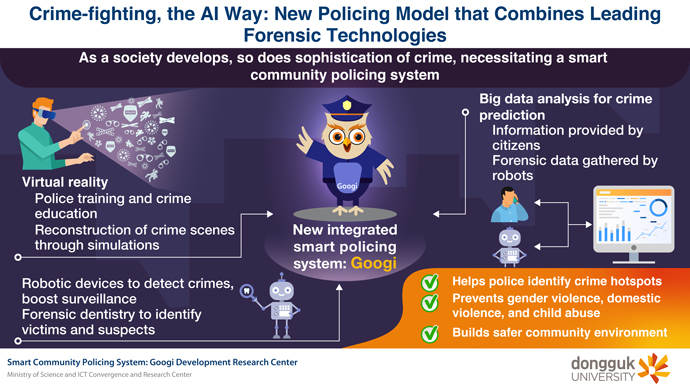
Crime-fighting the AI Way—New Policing Model That Combines Leading Forensic TechnologiesScientists at Dongguk University useleading technology of the 4th industrial revolution to construct aninnovative policing system, called Googi,that can improve community safety. Technologies across 3 key groups, based on virtualreality, robotics, and big data are combined in a policing system that enhancesprediction of crime and responses to it. Asa society develops, unfortunately, so does the sophistication of crime.Delinquency is constantly evolving, and delinquents use modern technology toescape the law. In such a scenario, a smart community policing system isessential to reduce crime and bring a sense of safety in residential areas. Ateam of scientists at Dongguk University led by Prof Joong-YeonLim decided to tackle this problem, and by integrating three main areas of theirresearch, have developed an innovative policing system that they have named “Googi.”Ofthe research areas, the first focuses on virtual reality used for policetraining and crime education and involves reconstruction of crime scenes throughsimulations.Thesecond investigates how robotic devices can detect and respond to crimes whenthey happen, boosting surveillance. This technology uses forensic dentistry toidentify victims and suspects. The form and pathology of teeth of Korean people,as well as bite marks, all contribute to personal identification.Thethird pertains to big data, where offline and online information is analyzed forcrime prediction and prevention. Virtual reality data, information provided bycitizens, and forensic data gathered by robots are analyzed for crimeprediction, with results handed over to local authorities. Combiningthese three modes together, the team has built a crime prediction algorithm usinginformation extracted from crime scenes, local communities, and forensics. Theresearchers are hopeful that this can help the police identify crimehotspots in real time and thus help them prepare for andrespond to crimes in vulnerable areas. Prof Lim states: “This technology can greatlycontribute to the prevention of gender violence, domestic violence, and childabuse.” Theproposed Googi system encourages citizen participation by gather their feedbackand providing results to the community, while boosting crime preventioneducation. The ability to detect individuals at crime scenes is also enhancedby using robotic technology to analyze Korean teeth. “As a result,” Prof Lim hopes, “crimes can be better predicted and responded to, resulting in a safercommunity environment.”After having successfully built a prototype on the local scale, the researchteam now looks to bring the technology to a global level in 2022.ReferenceSmartCommunity Policing System: Googi Development Research CenterMinistry of Science and ICTConvergence and Research Center*Email for correspondence: jsleearmy@dongguk.eduAbout DonggukUniversityDonggukUniversity, founded in 1906, is located in Seoul, South Korea. It comprises 13colleges that cover a variety of disciplines and has local campuses inGyeongju, Goyang, and Los Angeles. The university has 1300 professors whoconduct independent research and 18000 students undertaking studies in avariety of disciplines. Interaction between disciplines is one of the strengthson which Dongguk prides itself; the university encourages researchers to workacross disciplines in Information Technology, Bio Technology, CT, and Buddhism. Website: http://www.dongguk.edu/mbs/en/index.jsp About the researcherJoong-Yeon Lim (PhD, University ofCalifornia Berkeley, USA) is a Professor at the Department of Mechanical,Robotics and Energy Engineering at Dongguk University, Seoul, South Korea. Hisresearch interests include mechanical design, nanomaterials and intellectualproperty studies.
2020.03.09. 1893 -
DNA “Scissors” Could Cut Out the Alzheimer’s Causing Gene in Mic...
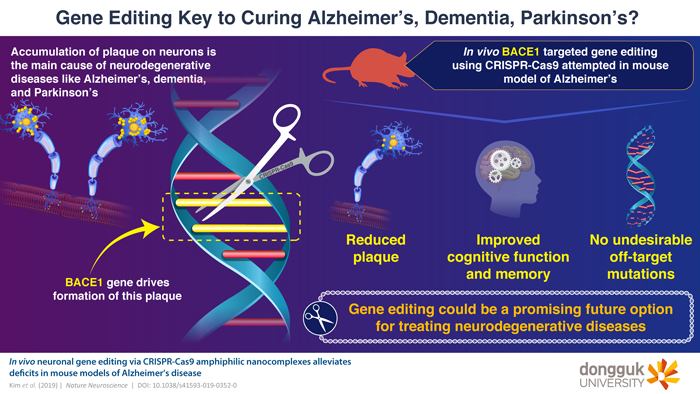
DNA “Scissors” Could Cut Out the Alzheimer’s Causing Gene in MiceScientistsat Dongguk University successfully treated Alzheimer’s disease in mice using thegene editing tool CRISPR-Cas9. They used the tool to edit out the Alzheimer’scausing gene in the mice, thereby improving their memory and other cognitivefunctions. While this is only a first step and much research remains to bedone, these promising results put gene therapy on the map of possibletreatments for Alzheimer’s.As Alzheimer’s diseasecontinues to elude the efforts of modern medicine, scientists turn to geneediting technology to treat, or ‘manage’ it. Alzheimer’s is commonly associatedwith the BACE 1 gene, which drives the production of amyloid-β proteins in the brain. Inthe brains of Alzheimer’s patients, this protein accumulates on the outsides ofneurons or nerve cells as “plaque,” and is thought to be one of the main causesof the disease. Using “DNA scissors” called CRISPR-Cas9, which can cut out aspecified part of a DNA sequence, Dr. Jongpil Kim and his colleagues from Korea(Dongguk University) and the USA attempted to edit out the BACE 1 genein the neurons of the adult mouse brain. Theirs is the first invivo attempt (using cells inside living mice) to test the effectiveness ofCRISPR-Cas9 in stopping Alzheimer’s progression. Their ultimate ambition—like that of many others in thefield—is to develop treatments fordifferent forms of dementia, which would dramatically improve patients’ qualityof life. “We aimed to see whetherCRISPR-Cas9, one of the latest developments in biotechnology, can open up a newdirection for treating dementia, which is, at present, considered an incurabledisease,” Dr. Kim says.Their results indeed lookpromising. Within 8 to 12weeks of treatment with the CRISPR-Cas9 technology, the plaque surroundingaffected neurons in the mice dramatically decreased and their cognitivefunctions improved substantially. The mice also showed betterassociative learning and spatial working memory. Further, there was noevidence of increasing mutations in other, non-targeted parts of the genome,suggesting minimal side-effects. All this indicates the hugepotential of gene editing technologies to treat neurodegenerative diseases: by removingfaulty genes at their source, disease progression can be halted, or evenreversed, in just a few weeks. The authors advise caution, however,as gene editing cannot be undone. In Dr. Kim’s words, one must ensure that “no detrimental, and potentially very rare,genomic alterations are caused”. Thus, this technique requires much moreresearch before it can be applied to human subjects. Nonetheless, as another remark byDr. Kim goes, “this study shows howCRISPR-Cas9 can be applied to the treatment of neurodegenerative diseases as well.”ReferenceAuthor:Jongpil KimTitle of original paper:In vivo neuronal gene editing via CRISPR–Cas9 amphiphilic nanocomplexes alleviates deficits in mouse models of Alzheimer’s diseaseJournal:Nature NeuroscienceDOI:10.1038/s41593-019-0352-0Affiliations:Departments of Chemistry and Biomedical Engineering, Dongguk University*Corresponding author’s email: jpkim153@dongguk.eduAbout DonggukUniversityDongguk University, founded in 1906, is located in Seoul, SouthKorea. It comprises 13 colleges that cover a variety of disciplines and haslocal campuses in Gyeongju, Goyang, and Los Angeles. The university has 1300professors who conduct independent research and 18000 students undertakingstudies in a variety of disciplines. Interaction between disciplines is one ofthe strengths on which Dongguk prides itself; the university encouragesresearchers to work across disciplines in Information Technology, BioTechnology, CT, and Buddhism. Website:http://www.dongguk.edu/mbs/en/index.jsp About the authorJongpil Kim is an AssociateProfessor of Chemistry and Director of Center for Regenerative medicine atDongguk University, Seoul, Korea. His group is developing approaches to controllingcell fate through nanotechnology for regenerative medicine. They are alsodeveloping CRISPR-Cas9 nanocomplexes for invivo gene editing technologies to treat neurodegenerative diseases. Dr. Kimpreviously completed postdoctoral training at Dr.RudolfJaenisch’slab at theMassachusetts Institute of Technology (Whitehead Institute). In2008, Dr. Kim received a PhD in Neurobiology from Columbia University.
2020.02.14. 2069 -
Dongguk University and the Shanghai University of Traditional Ch...
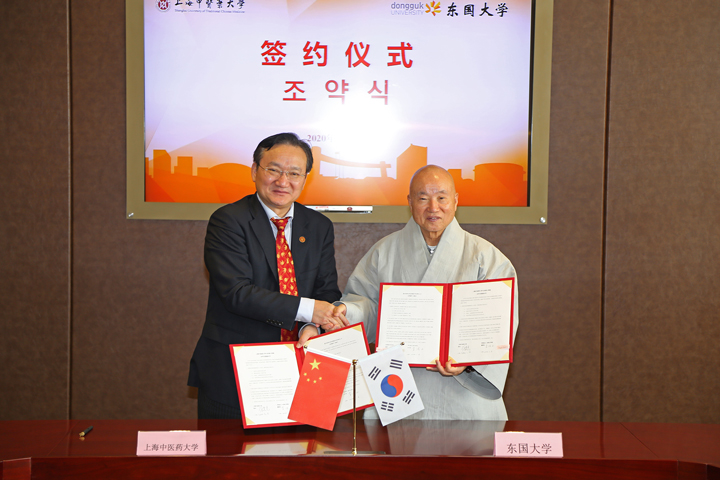
Dongguk University and the Shanghai University of Traditional Chinese Medicine Strike an Exchange AgreementExchanges in education and researchOur school and the Shanghai University of Traditional Chinese Medicine struck an exchange agreement on the 6th (last Monday). Beopsan Sunim, the Chairman of the Board, visited the Shanghai University of Traditional Medicine in China on Monday the 6th to strike the education and research agreement between the two schools.The focus areas of the exchange consist of ▲Exchanges for undergraduate and research students ▲Exchanges for staff and faculty ▲Exchanges in academic data, publications, and academic information and ▲The organization of joint research and conferences.For the agreement ceremony, the attendees from our school included Beopsan Sunim, the Chairman of the Board of Dongguk University, Kim Dong-Il, the Dean of the Dongguk University College of Korean Medicine, Park Ki-ryun, the Head of the Corporate Office, Lim Joong-yeon, the Head of the International Affairs Office, and Lee Hyung-yeol, the Chief Administrator of Ilsan Hospital. The Shanghai University of Traditional Chinese Medicine was represented by Seo Kun-gwang, the President of the school, Jung Lim-yoon, the Head of the International Exchange Office, Yu Hua, the head of the Hospital Management Office, Seo Hong-mae, the Head of the Development Planning Office, and Seo Jung, the Dean of Academic Affairs.The Shanghai University of Traditional Chinese Medicine, established in 1956, is the first traditional Chinese medicine school in China. It has approximately 8,000 students and 1,300 faculty members; in addition, the school has 8 hospitals. Other than Traditional Chinese Medicine, Chinese Materia Medica and Clinical Integrative Chinese, and Western Medicine, the school also offers majors in Nursing, Food Safety and Nutrition, Rehabilitation Therapy, Pharmaceutical Science, Bio-engineering, and Preventive Medicine.
2020.02.04. 2107 -
Stepping Up Spintronics with Room-temperature Magnetism in Molyb...
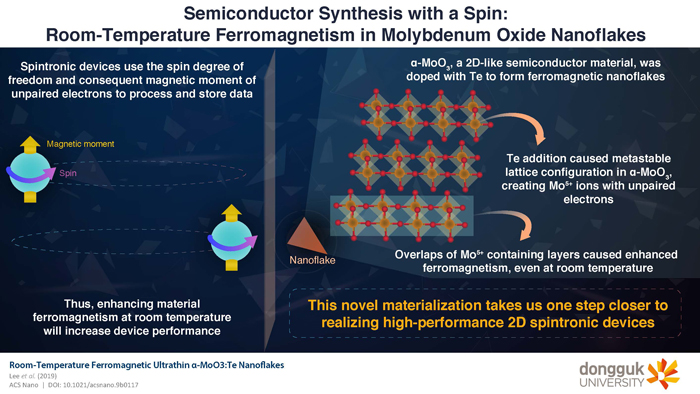
Stepping Up Spintronics with Room-temperature Magnetism in Molybdenum Oxide Nanoflakes Spintronicdevices, which use electron spin to process data, are emerging at the forefrontof semiconductor applications. Staying a step ahead, scientists from Korearecently developed a novel nanomaterial that shows uniform ferromagnetism evenat room temperature. This material is expected to be applicable to future next-generationelectronic devices.Growth in the number of smart electronic devices hassparked an increase in research interest in high functionality nanomaterials. Spintronic devices, which exploit a propertyof electron spin to process electronic data, have emerged as major players inthis field. “For instance,”notes Professor Sejoon Lee from Dongguk University, Korea, “ultra-fast logic and memory circuits, low-power small and lightelectronic modules, and quantum computing systems are possible futureapplications of spintronics.”Recently, 2D and quasi 2D materials, such as α-molybdenumoxide (α-MoO3), have gained research attention for use inspintronic devices, owing to their unique physical, chemical, mechanical, andstructural characteristics. α-MoO3,inparticular,is attractive because of its structure, which comprises stacked 2D layers. Thisstructure makes it ideal for introducing magnetism, enabling its more effectiveuse in a number of devices than conventional 3D bulk materials. To make an α-MoO3 nanoflakemagnetic, scientists at Dongguk University, Korea, led by Prof Lee, doped telluriumatoms into its lattice, disrupting its structure and freeing up an electron. Aselectrons revolve around the nucleus of an atom, they also spin on their axis.This spin gives rise to magnetism called the spin magnetic moment. The spins of several overlapping electronstaken together make the nanomaterial magnetic. But for electron spin to giverise to magnetic moment, the electron must be unpaired. Thus, this freedelectron in the α-MoO3 lattice adds magnetism to the material. Across themultiple stacked layers of the lattice, magnetism was felt even at roomtemperature. This exciting new studyis published in ACS Nano, a journalof the American Chemical Society. The scientists imaged the tellurium doped α-MoO3nanoflakes with scanning electron microscopy and found that the surface wassmooth, and the magnetism was spread evenly over the material. This is unlike thecase of conventional transition metal-doped magnetic nanomaterials, in whichthe formation of magnetic clusters and the consequent degradation offerromagnetic properties is a major problem. Optimistic about the applications of this discovery,Dr. Lee says, “The synthesized nanoflake can be effectively used forfabricating high-quality room-temperature ferromagnetic semiconductornanostructures. Since spintronicdevices are both highly energy-efficient and very useful for rapidly processinglarge amounts of data, a new paradigm can be created in the electronicsindustry.”ReferenceAuthor:Sejoon Lee et. alTitle of original paper: Room-Temperature Ferromagnetic Ultrathin α‑MoO3:Te NanoflakesJournal:American Chemical Society Nano DOI:10.1021/acsnano.9b01179 Affiliations:1 Quantum-functional Semiconductor Research Center, Dongguk University−Seoul 04623, Korea 2 Department of Semiconductor Science, Dongguk University−Seoul 04623, Korea *Corresponding author’s email: sejoon@dongguk.eduAbout Dongguk UniversityDongguk University, founded in 1906, is locatedin Seoul, South Korea. It comprises 13 colleges that cover a variety ofdisciplines and has local campuses in Gyeongju, Goyang, and Los Angeles. Theuniversity has 1300 professors who conduct independent research and 18000students undertaking studies in a variety of disciplines. Interaction betweendisciplines is one of the strengths on which Dongguk prides itself; theuniversity encourages researchers to work across disciplines in InformationTechnology, Bio Technology, CT, and Buddhism. Website: http://www.dongguk.edu/mbs/en/index.jsp About the authorDr.Sejoon Lee, the lead author of this paper, is Associate Professor at theDepartment of Semiconductor Science, Dongguk University, Korea. His researchinterests include semiconductor quantum-nanostructures, semiconductornanodevices, neuromorphic devices, and future intelligent nanosensors. Hisongoing project (2019-2023) on “Intelligent Electro-Acousto-Optically DrivableNeuromorphic Devices” is one of his continuingefforts to open new doors in nanoelectronics technology. He also currentlyserves as a Topic Editor of Nanomaterials (2019~).
2020.01.06. 2601 -
Professor Jung Joo-won Awarded Prize by the Ministry at KINPEX 2...
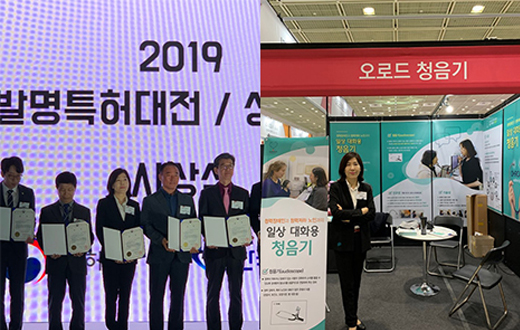
Professor Jung Joo-won Awarded Prize by the Ministry at KINPEX 2019 Developed a sound detector for daily conversations for people with hearing disability and elderly people with hearing loss Developed a sound detector for daily conversations for people with hearing disability and elderly people with hearing lossProfessor Jung Joo-won from the Department of Home Economics Education, Dongguk University was awarded the Korea Invention Patent Award by the Ministry of Trade, Industry and Energy at the 2019 Korea Invention Patent Exhibition (KINPEX).KINPEX was organized by the Korea Invention Promotion Association from November 27 to 30, at Samsung COEX, Gangnam-gu, Seoul, and was hosted by the Korean Intellectual Property Office.Professor Jung Joo-won was given the award for inventing a sound detector that can be used by people with hearing disabilities and elderly with hearing loss for daily conversations. This device effectively delivers sound so that those with hearing loss or disability can hear accurately. Professor Jung’s semi-permanent invention can be used in a noisy environment and can also be used wirelessly with a Bluetooth or microphone connection.Professor Jung said, “I am delighted that my thoughts to alleviate inconvenience in daily life has become a working idea, and has developed into an invention,” and added, “Through meaningful commercialization of the device, I am hoping for a happy society where people who are hard of hearing and the elderly can communicate easily.”
2019.12.11. 1826 -
Award-winning processing technique cuts out noise from real-worl...
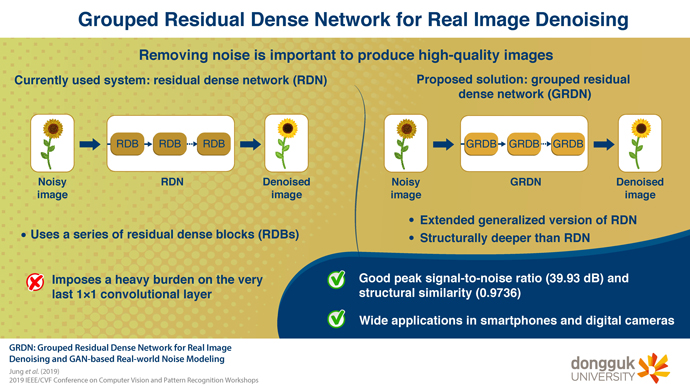
Award-winning processing technique cuts out noise from real-world images Denoising is a crucial process in devices that produce images, like smartphones and digital cameras. A team of scientists at Dongguk University proposed an upgraded method to remove noise from images, which efficiently produces high-quality images. This new method was ranked first place in a prestigious real-world image denoising challenge, called the NTIRE 2019 Real Image Denoising Challenge. Modern electronic devices are capable of producing high-quality images, but the process of acquiring and processing images is complex. Sometimes, disruptions in signals that produce images lead to “noise,” which causes the images to be blurry or of poor quality. To correct these “noisy” images, one type of approach involves the addition of synthetic noise to a noise-free image. But, this method is flawed, as these artificial noisy images are very different from real-word images. To focus on real-world images, another type of approach involves the use of an image acquisition algorithm, in which a ground-truth image (reflecting how reality looks) is converted to an artificially produced noisy image. The noisy, blurry image can then be reverted to the original, sharp image using the same algorithm. This technique is effective, but currently, it lacks a large enough dataset to denoise images efficiently. In a new study published in the 2019 IEEE/CVF Conference on Computer Vision and Pattern Recognition Workshops, a team of researchers at Dongguk University in South Korea, led by Dr Seung-Won Jung, built a state-of-the-art image denoising method, which is much more efficient than previous methods. Talking about the importance of this study, Dr Jung says, “Real-world image denoising is still very challenging because it is not possible to obtain ideal pairs of ground-truth and real-world noisy images. Through our study, we wanted to resolve the issues faced by existing denoising methods.”For their study, the scientists used images from the database of the NTIRE 2019 Real Image Denoising Challenge. By generating a new computational architecture, which they named as “group residual dense network,” they managed to augment the existing dataset of real-world noisy and ground-truth images, which helped them achieve the highest possible level of peak signal-to-noise ratio and structural similarity. What’s more, this new image-correcting method was even ranked first place at the NTIRE 2019 Real Image Denoising Challenge for its novelty and efficiency. Describing this method, Dr Jung says, “While previous research often used artificially produced noisy images, we built a database of real-world noisy images instead.”Removing noise is important for devices such as smartphones and digital cameras to produce high-quality images. By finding a more efficient denoising method, this study has possibly made significant advancements in the field of image processing. Dr Jung concludes by talking about the applications of the study, “We believe that our real-world noise modeling method can be extended to various applications, such as removing blur, aliasing, and haze in images produced by devices like mobile phones and cameras, showing its versatility.” ReferenceTitle of original paper: GRDN: Grouped Residual Dense Network for Real Image Denoising and GAN-based Real-world Noise ModelingAuthor: Dr Seung-Won Jung Affiliation: Department of Multimedia Engineering, Dongguk University, Seoul About Dongguk UniversityDongguk University, founded in 1906, is located in Seoul, South Korea. It comprises 13 colleges that cover a variety of disciplines and has local campuses in Gyeongju, Goyang, and Los Angeles. The university has 1,300 professors who conduct independent research and 18,000 students undertaking studies in a variety of disciplines. Interaction between disciplines is one of the strengths on which Dongguk prides itself; the university encourages researchers to work across disciplines in Information Technology, Bio Technology, CT, and Buddhism. Website : http://www.dongguk.edu/mbs/en/index.jspAbout the authorDr Seung-Won Jung completed his BS and PhD degrees in electrical engineering from Korea University, Seoul, Korea, in 2005 and 2011, respectively, where he was a Research Professor with the Research Institute of Information and Communication Technology in Korea University from 2011 to 2012. He was a Research Scientist at the Samsung Advanced Institute of Technology, Yongin, Korea, from 2012 to 2014. He is currently an Assistant Professor at the Department of Multimedia Engineering, Dongguk University, Seoul. He has authored over 50 peer-reviewed articles in international journals. His current research interests include augmented reality, virtual reality, and computer vision algorithms.
2019.12.09. 1626 -
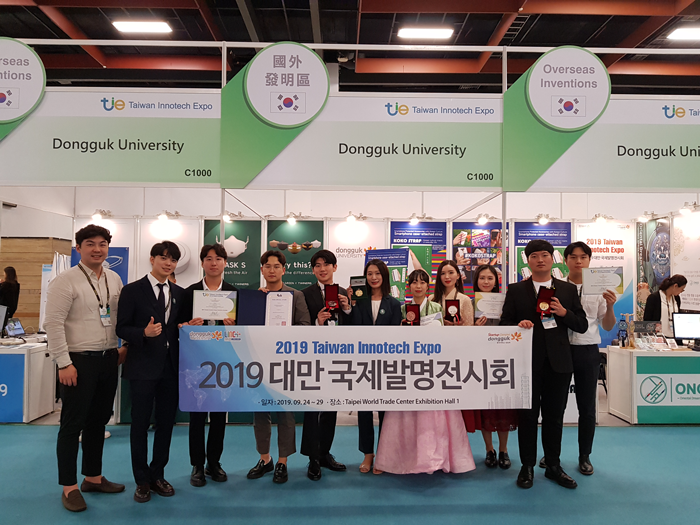
All Dongguk University Participants Awarded at the “2019 Taiwan ...
All Dongguk University Participants Awarded at the “2019 Taiwan Innotech Expo” Dongguk University achieved outstanding results in the Expo with one gold and two silver medals, in addition to a participation award and a special award for its four teams.Excellent startup ideas from the university’s d. Campus CEO (startup organization) swept the 2019 Taiwan Innotech Expo Awards held in Taipei. The university announced on October 1 that all four participating student startup groups had been awarded at the Expo, which was held in the Taipei World Trade Center from September 26 to 28.The expo is the largest annual event of international inventions and new technologies within the Greater China region, with a total of 800 inventions from 20 countries. Defeating the other prominent candidates, Dongguk University teams won the gold, silver, and participation awards, along with a special award. The honor of the gold award went to “Clomount” (team head Min-soo Kim/Department of Computer Engineering, team member Ku-hyeop Lee/Department of Computer Engineering), who developed a “remote-controlled smart home Internet-of-Things device.” The judges highly praised the device because it could have a commercial value as a smart IoT product. It also received substantial attention from foreign buyers and investors.The silver awards were awarded to “Challengers” (Co-heads Sung-hwan Lim/Department of Electrical Engineering and Yong-jin Kwon/Department of Mechanical Engineering, and team members Seung-gu Kang/Department of Electrical Engineering, Joon-tae Hwang/Department of Electrical Engineering and Ji-young Lim/Department of Visual Design), who developed a “semi-permanent water filter mask” and to “Ongo” (team members Do-seon Park/Department of Korean Language & Literature and Creative Writing and Sol Shin/Department of Arts) who designed a “traditional Korean spiritual dream catcher.” In addition, the participation award was given to “Mua” (team member Yoo-jin Cho/Department of Advertising and Public Relations), who designed a “smart phone protection strap embracing Korean culture.” Finally, “Challengers” received a special award from the World Invention Intellectual Property Association (WIIPA), which highly praised their invention. Our university has continuously supported students’ participation in international competitions through various global entrepreneurship training programs based on the Startup Youth Entrepreneur Center and the LINC+ Business Group. Specifically, it has focused on strengthening the capabilities of global startups through the “Education Program for Global Entrepreneurs.”Dae-young Kim, the Dean of Entrepreneurship at Dongguk University, said, “We hope to enter the overseas markets through cooperation with foreign buyers and investors that have shown interest in this international exhibition.” He also mentioned future plans: “Our university will provide follow-up management and support to help our students take further steps onto the global stage.”
2019.10.30. 1671

- Seoul Campus
- 30, Pildong-ro 1-gil, Jung-gu, Seoul, 04620, Republic of Korea
- Tel. +82-2-2260-3314 Fax. +82-2-2260-2277
- incoming@dongguk.eduExchange Program
- scf@dongguk.eduInternational Students Services
- adm@dongguk.eduInternational admission
- cscenter@dongguk.eduCertificate Issuance, Education Verification
- kic@dongguk.eduKorean Language Course
Copyright(c) DONGGUK UNIVERSITY. ALL RIGHTS RESERVED.